
RVs & Mobile Homes
Mini Split Installation for RVs & Mobile Homes in Texas
Rooftop RV air conditioners are loud, inefficient, and useless below 40°F. A ductless mini split fixes all three — and for full-time residents in Texas heat, it is the single biggest quality-of-life upgrade available.
- Veteran-Owned & Operated
- TDLR-Licensed Installers (#133305)
- EPA-Certified Installers (#3102/A-720-0010)
- 4.9 / 5 Star Rated Installs
An RV or mobile home mini split runs $2,000 to $5,500 installed in Texas, depending on unit size and equipment quality. Most rigs need 9,000–12,000 BTU. The system draws roughly half the amperage of a rooftop unit at comparable output, which matters when you are on a 30-amp pedestal.
The problem with rooftop RV air conditioners
A standard RV rooftop unit is a single-speed compressor sitting eighteen inches above your head with nothing but a plastic shroud between you and it. It is loud enough to interrupt conversation, it cycles hard on and off, and it has no meaningful heating capability — the “heat pump” mode on most rooftop units quits around 40°F, which in Texas means it quits exactly when you need it.
It is also a power hog. On a 30-amp pedestal you have roughly 3,600 watts to work with. A rooftop AC can consume half of that by itself, which is why running the microwave trips the breaker.
What changes with ductless
An inverter mini split modulates its compressor speed continuously instead of running flat out or not at all. In practice that means three things for RV and mobile home owners:
- Noise drops substantially. Indoor units run in the low-to-mid 20 dB range at minimum fan speed. The compressor is outside and away from your head.
- Amperage drops by roughly half at equivalent cooling output, and the start-up surge nearly disappears.
- Heat becomes practical. Heat-pump heating down to 5°F replaces most propane furnace runtime, which for full-timers is a meaningful monthly saving.
Sizing for a rig or manufactured home
| Space | Typical size | Recommended |
|---|---|---|
| Travel trailer / Class C (under 250 sq ft) | 1 zone | 9,000 BTU |
| Fifth wheel / Class A (250–400 sq ft) | 1 zone | 12,000 BTU |
| Park model (400–600 sq ft) | 1–2 zones | 18,000 BTU or 2× 9,000 |
| Single-wide manufactured home | 2–3 zones | 24,000–36,000 BTU multi-zone |
| Double-wide manufactured home | 3–4 zones | 36,000+ BTU multi-zone |
RVs need proportionally more capacity than their square footage suggests because of thin walls, large single-pane windows, and minimal insulation. Do not under-size on the theory that the space is small.
Mounting the condenser
This is where RV installs differ from every other job and where a careless install shows up later.
For a rig that stays parked — the common case for full-time residents in Texas RV communities — a ground pad beside the trailer is the best answer. It is quiet, serviceable, and avoids stressing the frame. Refrigerant line length is not a constraint at these distances.
For a rig that travels, the condenser must be bolted to structure, not skin, and the line set needs strain relief and protection where it passes through the wall. Many owners with travel-capable installs use a quick-disconnect line set so the condenser can come off before a move. Discuss this with your installer before the job — retrofitting it afterward is expensive.
Electrical and permitting notes
Manufactured homes in Texas fall under Texas Department of Housing and Community Affairs rules rather than standard municipal building code, and installation requirements differ. RV parks often have their own restrictions on exterior equipment. Your installer should confirm both before the work starts.
If you are weighing this against replacing a failing ducted system, the mini split vs central AC comparison covers the tradeoffs, and the pricing guide has full cost tables by size.
Recent Installs
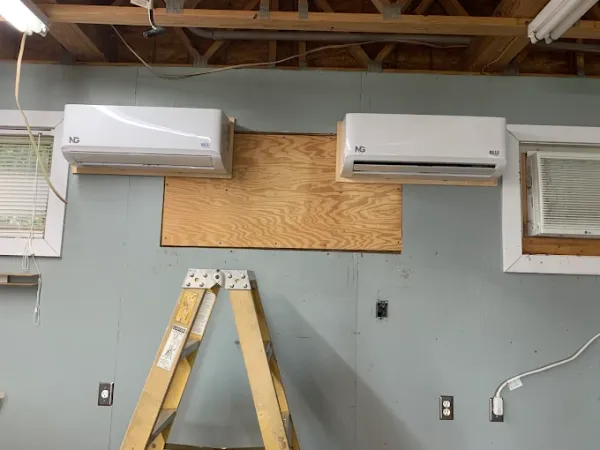
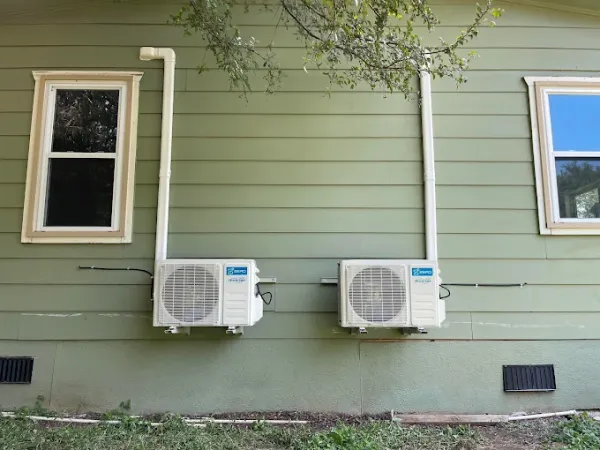
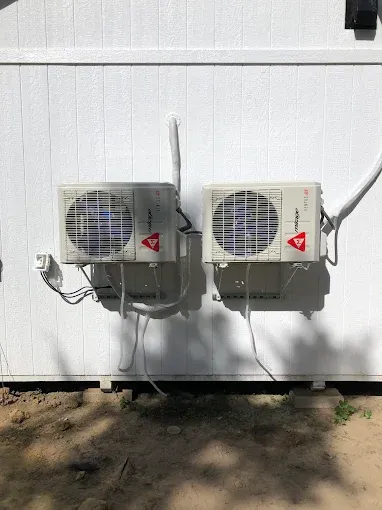
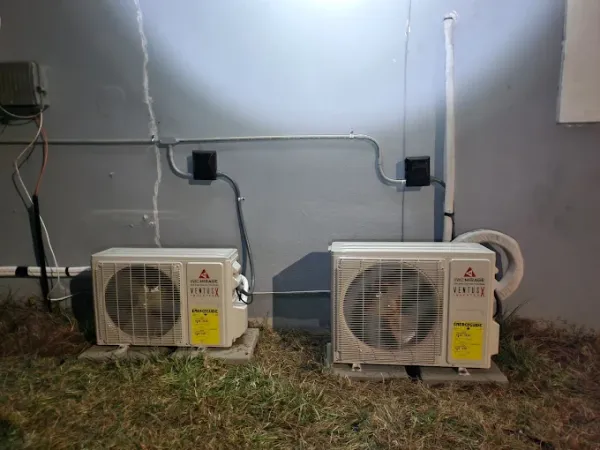
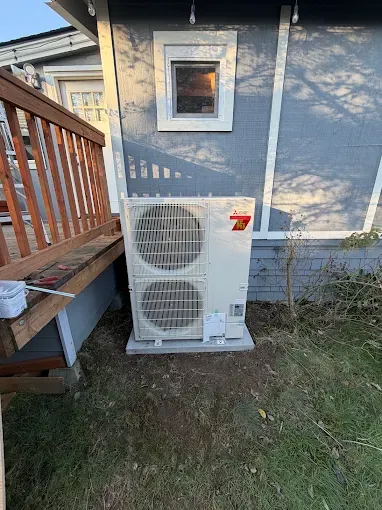
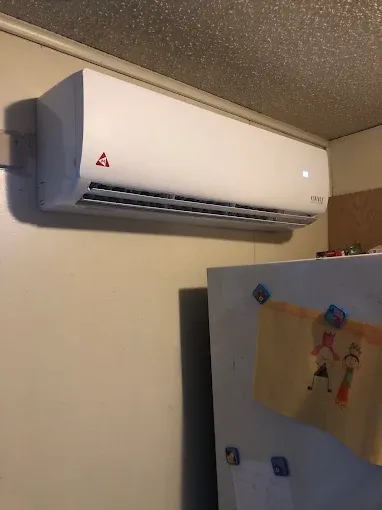
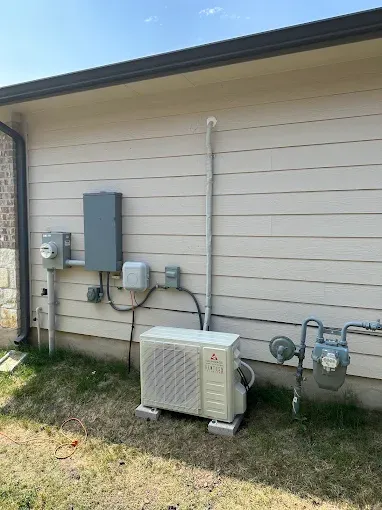
Actual completed jobs by the licensed installers in our Texas network.
RV & Mobile Home Mini Splits: Common Questions
Can you install a mini split on an RV or travel trailer?
How much power does an RV mini split draw compared to a rooftop AC?
Will a mini split heat my RV in a Texas winter?
Is a mini split worth it for a mobile or manufactured home?
Ready To Get Started?
Free, no-obligation quotes from local professionals.
Get an Exact Quote for Your Home
Fill out the form below and a local pro will reach out shortly.
Mon–Fri 8am–5pm CST · Free, no-obligation quotes · No pressure, no hidden fees