
Tiny Homes & Off-Grid
Mini Splits for Tiny Homes & Off-Grid Builds in Texas
Low power draw, a small footprint, and heating plus cooling from a single unit — ductless is the default climate system for tiny homes, and the only one that works on a modest solar array.
- Veteran-Owned & Operated
- TDLR-Licensed Installers (#133305)
- EPA-Certified Installers (#3102/A-720-0010)
- 4.9 / 5 Star Rated Installs
A tiny home mini split runs $2,000 to $5,500 installed in Texas. Most builds use a single 9,000 BTU unit, which is the smallest common size and still more than adequate for 200–400 sq ft. Running draw is roughly 300–700 watts, low enough for a well-designed off-grid system.
Why ductless is the default for tiny homes
There is genuinely no competitive alternative for a 200–400 square foot dwelling in Texas.
A window unit is loud, occupies a window you cannot spare, provides no real heat, and looks like what it is. Electric resistance heaters draw enormously — a 1,500 watt space heater consumes two to four times what a mini split uses to produce comparable warmth. Propane heaters add combustion byproducts and moisture to a small sealed space, which is both a comfort and a safety issue. A ducted system in a tiny home is absurd on its face; the ductwork would occupy meaningful living space.
A single ductless head does all of it: cooling in August, heating in January, dehumidification in the shoulder seasons, from one unit that occupies part of one wall and draws a few hundred watts.
Power draw and off-grid sizing
This is the question that matters most for off-grid builds.
| Condition | Draw (9,000 BTU inverter unit) |
|---|---|
| Minimum / maintaining temperature | ~150–300 W |
| Typical Texas summer afternoon | ~400–700 W |
| Maximum, pulling down from hot | ~800–1,000 W |
| Heating, mild winter day | ~300–500 W |
| Start-up surge | Minimal — compressor ramps |
The absence of a large start-up surge is what makes inverter mini splits viable off-grid. A conventional fixed-speed compressor can draw five to seven times running current at start, which is what forces oversized inverters and battery banks. Inverter-driven units ramp smoothly and never present that spike.
A workable Texas off-grid configuration for year-round comfort is roughly 2,000–3,000 W of solar, 8–12 kWh of usable battery, and a 3,000 W inverter. If you only need cooling during daylight hours and can let the space drift overnight, you can go considerably smaller.
Insulation matters more here than anywhere
In a small volume, envelope quality dominates. A tiny home with closed-cell spray foam and good windows can hold temperature with the unit idling most of the day. The same shell with thin batt insulation and single-pane windows will run the unit near capacity and, off-grid, will exhaust the battery bank overnight.
If you are building, spend on the envelope before spending on the system. It is the cheaper path to comfort and it permanently lowers the power budget.
Mounting in a small space
Two constraints show up repeatedly in tiny homes:
Wall space is scarce. A standard wall-mount head needs roughly 32 inches of width and clearance below. In very tight builds, a floor-mounted unit — which sits low like a radiator and can tuck under a window — often fits better. Ceiling cassettes are usually impractical given roof construction.
Air distribution is easy but placement still matters. Do not aim the head directly at a sleeping loft. Warm air rises, so lofts run hot in summer regardless; in winter they will be the warmest place in the house. A small fan to move air between the main level and the loft solves both.
Permits and classification
Tiny homes occupy an awkward regulatory position in Texas. A tiny home on a permanent foundation is typically treated as a dwelling and needs standard mechanical and electrical permits. A tiny home on wheels may be classified as an RV, which changes the rules considerably and varies by jurisdiction. Some Texas counties have adopted tiny-home-specific provisions; many have not.
Your installer should confirm classification before pulling permits — it determines both what inspection is required and, in some cases, whether a licensed installation is required at all.
See RV and mobile home systems for the closely related case, or the full pricing tables.
Recent Installs
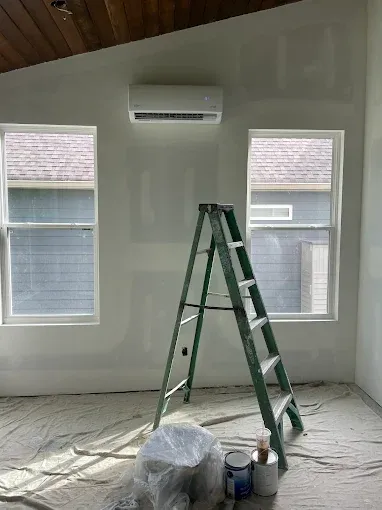
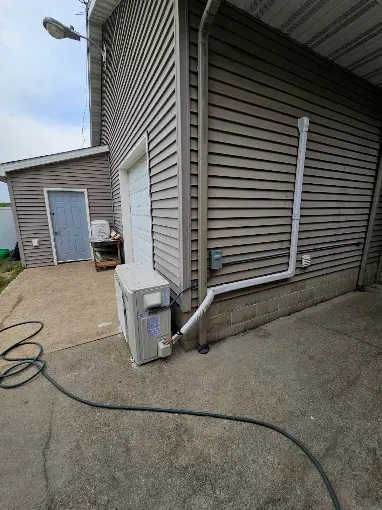
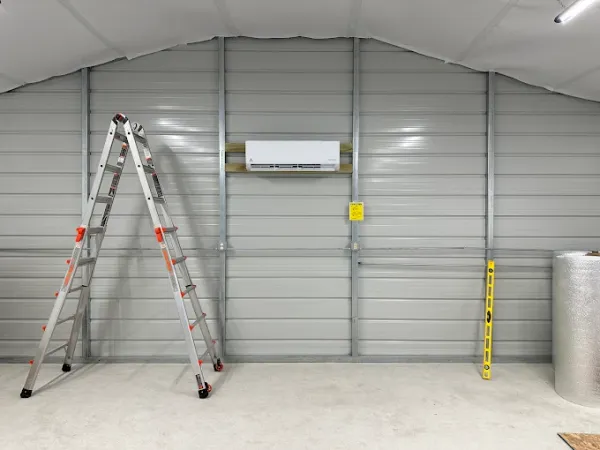
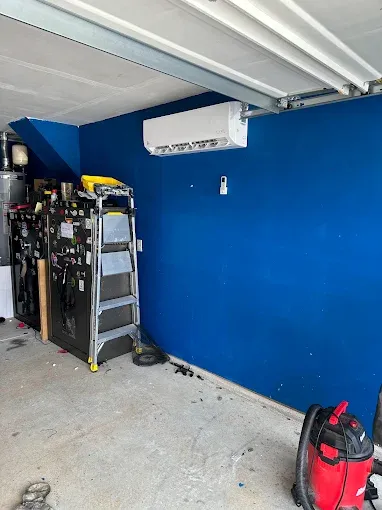
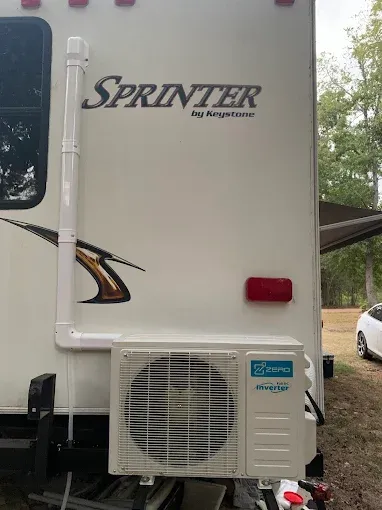
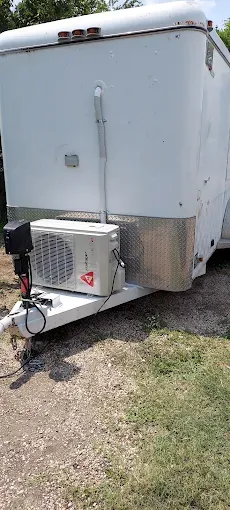
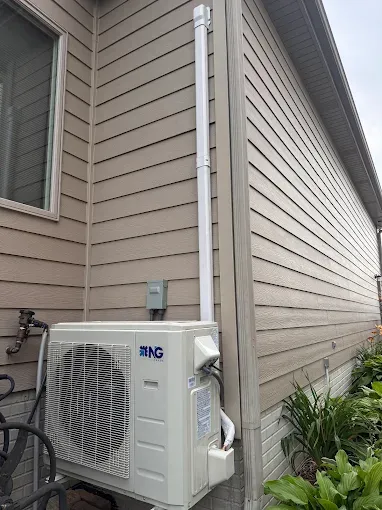
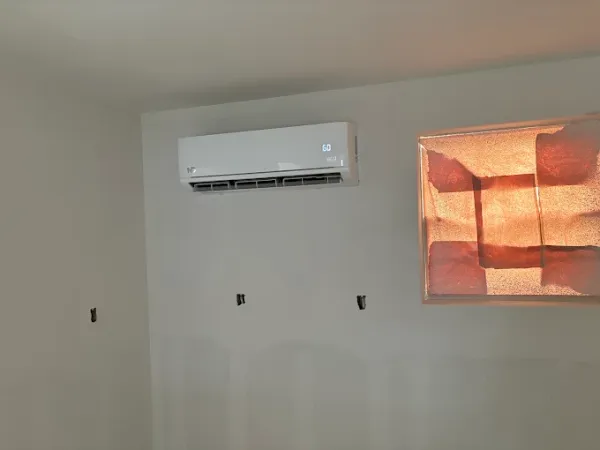
Actual completed jobs by the licensed installers in our Texas network.
Tiny Home Mini Splits: Common Questions
What size mini split for a tiny home?
Can a mini split run on solar?
Will a mini split heat a tiny home in a Texas winter?
Can I install a mini split in a tiny home on wheels?
Ready To Get Started?
Free, no-obligation quotes from local professionals.
Get an Exact Quote for Your Home
Fill out the form below and a local pro will reach out shortly.
Mon–Fri 8am–5pm CST · Free, no-obligation quotes · No pressure, no hidden fees