
Commercial & IT
Commercial Mini Split Installation in Texas
Server rooms that must stay cold after hours, salons with heat loads the building system never anticipated, and retail suites at the mercy of a landlord thermostat. Ductless gives a commercial space its own cooling on its own schedule.
- Veteran-Owned & Operated
- TDLR-Licensed Installers (#133305)
- EPA-Certified Installers (#3102/A-720-0010)
- 4.9 / 5 Star Rated Installs
Commercial mini split installation in Texas runs $2,000 to $5,500 per zone, with server-room applications typically higher because they require year-round cooling capability and often redundancy. The decisive advantage is independence: the system runs on your schedule, not the building's.
Where commercial ductless makes sense
Commercial mini splits solve a specific class of problem: a space whose cooling needs do not match what the building system provides, either in schedule, capacity, or control.
Server and IT rooms. The building system shuts down at 6pm and on weekends. Your equipment does not. This is the most common commercial ductless application in Texas and the one where failure is most expensive.
Salons and barbershops. Dryers, styling equipment, and dense occupancy generate a heat load no landlord anticipated when the suite was built out. Salons routinely run 8–12 degrees warmer than adjacent suites on the same system.
Retail and restaurant suites. Tenants on a shared system get whatever the landlord’s thermostat says. A dedicated unit means you control your own space, and it usually reduces your share of common-area energy cost.
Warehouses and shops with an office. Conditioning one office inside a large unconditioned building is impractical with a central system and trivial with a single ductless zone.
Portable and modular buildings. Schools, churches, and construction offices across Texas use ductless because it installs quickly and moves with the building.
Server rooms: the details that matter
This is where commercial installs go wrong most often, and the failure mode is expensive.
Size on heat output, not area. Add up equipment wattage and multiply by 3.41 for BTU/hr. Add 20 percent. A 5,000 W rack load means roughly 17,000 BTU/hr, so an 18,000 BTU unit.
Specify a low-ambient kit. Without it, the unit will not produce cooling below roughly 50°F outdoor. Your servers generate the same heat in January as in July. This is the single most common oversight.
Consider redundancy. For anything business-critical, two smaller units beat one large one. If one fails, you have degraded cooling rather than none, and you can service one without shutting down.
Plan the condensate drain. A unit running year-round produces water year-round. In a room full of electronics, where that water goes deserves thought — a condensate pump with an alarm float is cheap insurance.
Add monitoring. A temperature sensor that texts you at 85°F costs very little and has saved a great many server rooms.
Cost by application
| Application | Typical system | Installed range |
|---|---|---|
| Small server / IT closet | 12,000 BTU + low-ambient kit | $3,000–$5,500 |
| Larger server room | 18,000–24,000 BTU, often redundant | $5,500–$12,000 |
| Salon or barbershop | 18,000–24,000 BTU | $3,000–$6,000 |
| Retail suite (1,000–1,500 sq ft) | Multi-zone, 36,000 BTU total | $6,500–$14,500 |
| Warehouse office | 12,000–18,000 BTU | $2,000–$5,500 |
Commercial pricing carries more variance than residential because permit requirements, after-hours labor, roof penetrations, and electrical capacity differ so much between buildings.
Practical points for tenants
Get landlord approval in writing before anything else, and settle four questions in it: where the condenser goes, who owns the equipment at lease end, who is responsible for penetrations and their repair, and whether the work must be done after hours.
Also confirm electrical capacity early. Leased suites frequently have panels sized precisely for the original build-out with no spare capacity, and a service upgrade in a commercial building is a considerably larger project than in a house.
See the pricing guide for cost by unit size, or multi-zone systems if you are covering several rooms from one condenser.
Recent Installs
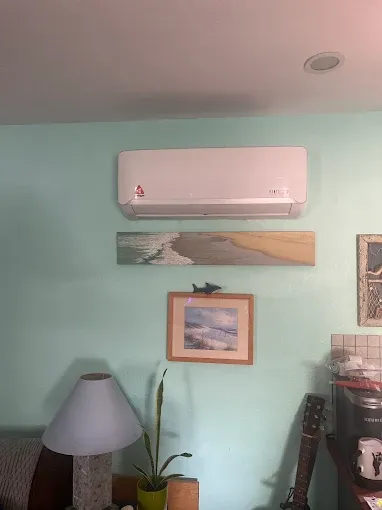
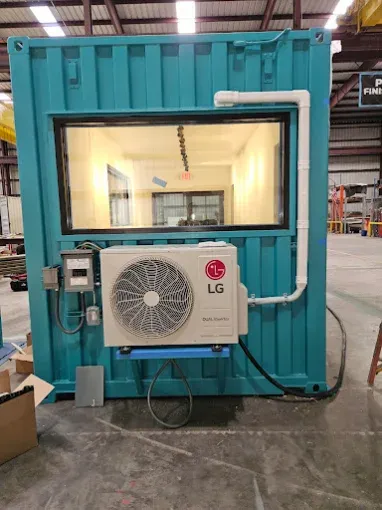
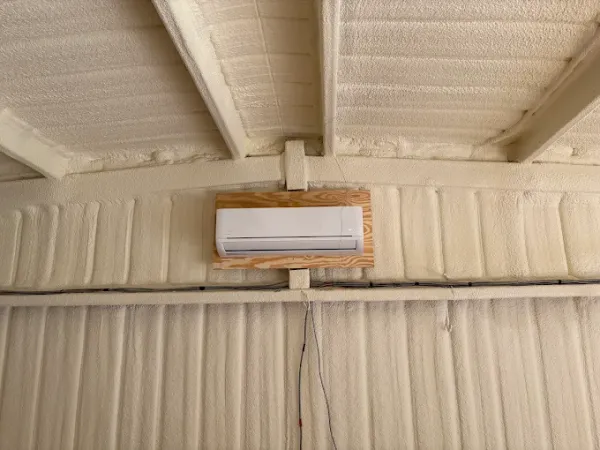
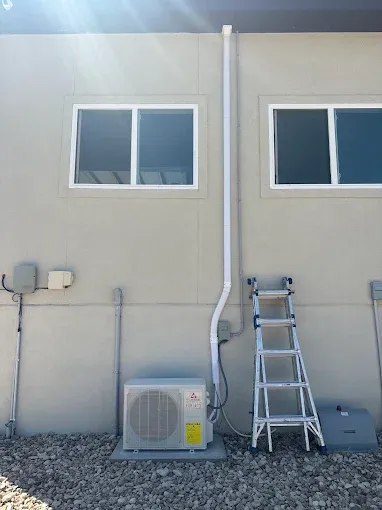
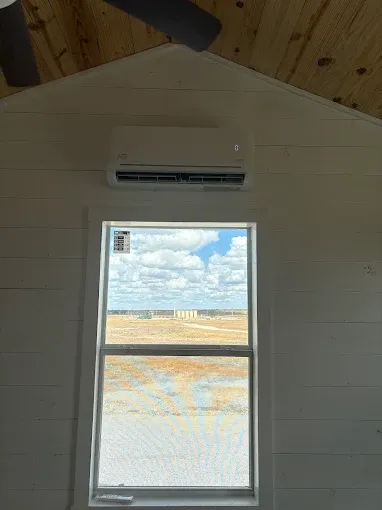
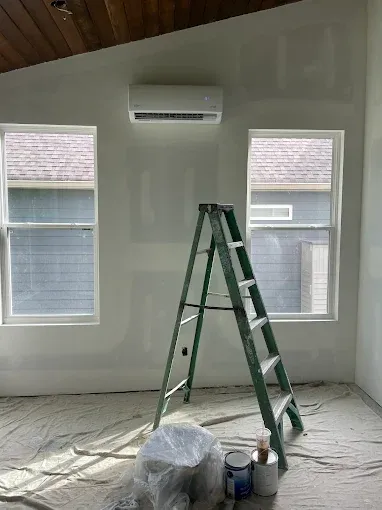
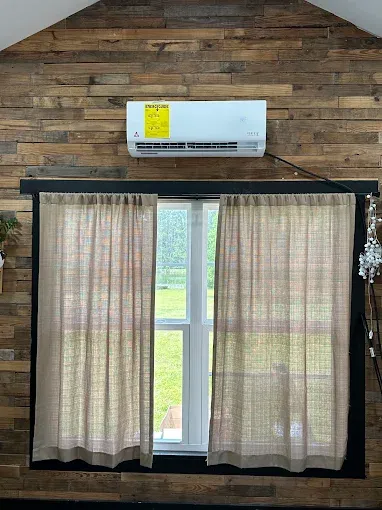
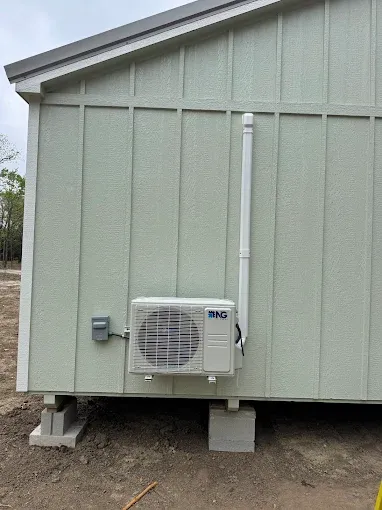
Actual completed jobs by the licensed installers in our Texas network.
Commercial Mini Splits: Common Questions
Can a mini split cool a server room year-round?
What size mini split does a server room need?
Do commercial mini split installations need different permits?
Will my landlord allow a mini split in a leased suite?
Ready To Get Started?
Free, no-obligation quotes from local professionals.
Get an Exact Quote for Your Home
Fill out the form below and a local pro will reach out shortly.
Mon–Fri 8am–5pm CST · Free, no-obligation quotes · No pressure, no hidden fees