
Greater San Antonio · Bexar County
Mini Split Installation in San Antonio, TX
CPS Energy is municipally owned, which makes San Antonio rebates among the most straightforward in Texas. We match homeowners from Alamo Heights to Stone Oak with licensed installers who know the program and the city permit process.
- Veteran-Owned & Operated
- TDLR-Licensed Installers (#133305)
- EPA-Certified Installers (#3102/A-720-0010)
- 4.9 / 5 Star Rated Installs
Mini split installation in San Antonio runs $2,000 to $5,500 installed for a single-zone system. CPS Energy pays $100 to $275 per ton on qualifying heat pumps, and because CPS is a municipal utility the process is simpler than in deregulated Texas markets — one utility handles your bill and your rebate.
The municipal utility advantage
San Antonio is different from Dallas and Houston in a way that matters for rebates. CPS Energy is municipally owned — the largest municipally owned electric and gas utility in the country — and it serves nearly all of Bexar County.
In deregulated Texas markets, homeowners buy electricity from a retail provider while a separate delivery utility runs the efficiency programs. This confuses people constantly, and plenty of eligible homeowners never claim a rebate because they do not know who their delivery utility is.
In San Antonio there is no such split. CPS Energy bills you and CPS Energy pays the rebate. If you have a CPS bill, you are in the program territory.
Rebates are paid per ton of capacity rather than as a flat amount, generally $100 to $275 per ton depending on the efficiency of the equipment installed. A 2-ton system — 24,000 BTU, which covers a large living area or a garage — lands roughly in the $200 to $550 range. Confirm current figures with CPS before you schedule, since amounts and program-year dates are revised annually.
The federal 25C tax credit that offered up to $2,000 on a qualifying heat pump expired December 31, 2025. For 2026 installations, the CPS rebate is the incentive available.
Historic districts and the condenser question
San Antonio has one of the most active historic preservation programs in Texas, and it affects a large number of desirable neighborhoods. King William, Monte Vista, Lavaca, Dignowity Hill, and several others are designated districts with exterior design review administered by the Office of Historic Preservation.
This is not an obstacle to ductless — if anything it is an argument for it. Retrofitting ductwork into a 1900s King William house means opening plaster walls, building soffits, and losing ceiling height, all of which are far more disruptive to historic fabric than a three-inch penetration and an exterior condenser.
What requires attention is where the condenser goes. The reliable approach is a rear or side elevation, out of view from the primary street frontage, screened with fencing or planting that does not block airflow. Line-set covers painted to match trim are much less conspicuous than exposed tubing.
Ask your installer to raise this with OHP before ordering equipment. Sorting it out in advance is routine; discovering it afterward is not.
What San Antonio homes actually need
The city’s housing runs from turn-of-the-century stock inside Loop 410 to large new construction in Stone Oak and the far north side, and the ductless use cases differ.
Inside the loop — Monte Vista, Alamo Heights, Olmos Park, Southtown — the homes are older, frequently with additions, converted garages, and enclosed porches that the original central system never served. These are classic single-zone jobs.
Farther out, in Stone Oak and Helotes, the housing is newer and the complaints are about specific rooms: the game room over the garage, the west-facing office, the casita out back. Hill Country sun on a west elevation is intense enough that a room’s orientation moves its cooling load substantially, and homeowners routinely underestimate it.
Casitas and guest houses deserve a specific mention. San Antonio has a strong tradition of detached secondary structures, and they are among the best ductless applications there is — independent control, no trenching to the main house, and a system sized for the actual space. See ADU and pool house systems for details.
Sizing for a drier heat
San Antonio sits at the edge of the Hill Country and is meaningfully drier than Houston. The practical effect is that latent load — moisture removal — is a smaller share of the total, so the clammy-room failure mode that plagues oversized Gulf Coast installations is less severe here.
That is not license to oversize. An oversized unit still short-cycles, still wears its compressor faster, and still costs more than it needed to. But San Antonio homeowners have a bit more margin than Houston homeowners do.
The factor that deserves more attention locally is solar gain. West-facing rooms with significant glass take punishing afternoon sun from spring through October. Tell your installer the orientation — it changes the recommendation more here than the square footage does.
Getting started
See the full Texas pricing tables for cost by system type, or read about single-zone systems if you are conditioning one room.
Mini split installation cost in San Antonio
Estimated installed cost by system type, covering equipment and labor. Installed pricing is broadly consistent across Texas — labor rates vary modestly between metros, but system type and unit size drive the number.
| System type | Typical use case | Estimated installed cost |
|---|---|---|
| Single-Zone (12k BTU) | A hot bonus room over the garage, a home office, or a converted space. | $2,000 – $5,500 |
| Dual-Zone (2 heads) | Cooling a primary suite and a home office on one condenser. | $4,000 – $9,000 |
| Multi-Zone (3–4 heads) | Zoned cooling for an older home with no duct space. | $6,500 – $11,000 |
| Whole-Home Replacement | Replacing central AC entirely for room-by-room control and humidity management. | $10,000 – $14,500 |
Estimates for typical installations, not a quote. See the full Texas pricing guide for cost by system type.
Rebates and incentives in San Antonio
CPS Energy — Residential HVAC and heat pump rebates
CPS Energy is municipally owned and serves nearly all of Bexar County, so unlike deregulated markets there is no separation between your retail provider and your delivery utility — one organization handles both. Heat pump rebates are paid per ton of capacity, generally $100 to $275 per ton depending on efficiency. Projects must be completed within the program year, which currently runs February 1 through the following January 31. Equipment must be installed by a Texas-licensed HVAC contractor.
Program names, amounts, and eligibility change every year and funds often run out mid-season. Confirm current terms with CPS Energy and your installer before counting on a rebate.
Permits in San Antonio
The City of San Antonio requires a mechanical permit for a new mini split and an electrical permit if a dedicated circuit is added. Your licensed contractor files through the city Development Services Department. San Antonio has an unusually active historic preservation program — King William, Monte Vista, Lavaca, and Dignowity Hill are all designated districts where exterior equipment placement can require review by the Office of Historic Preservation. Raise it at quote time; screening the condenser or placing it on a rear elevation generally resolves it.
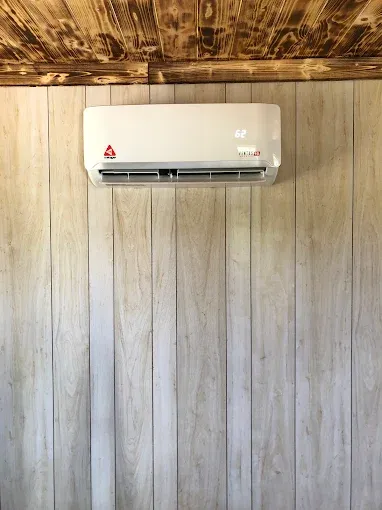
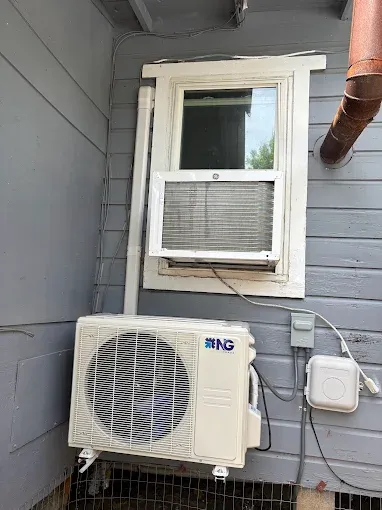
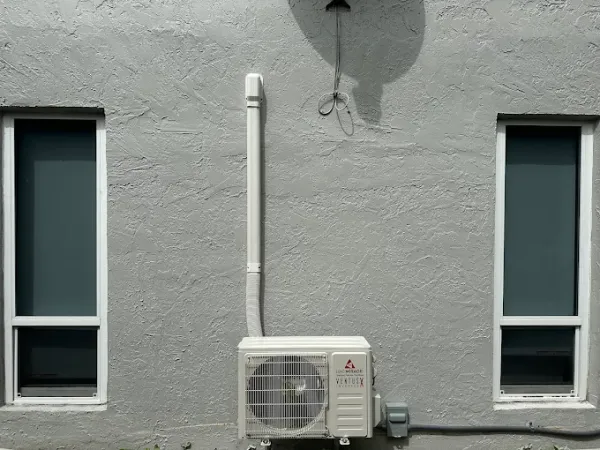
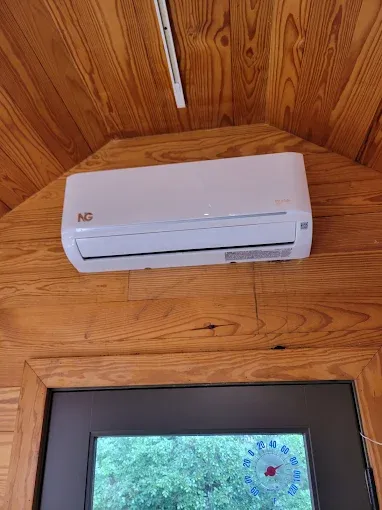
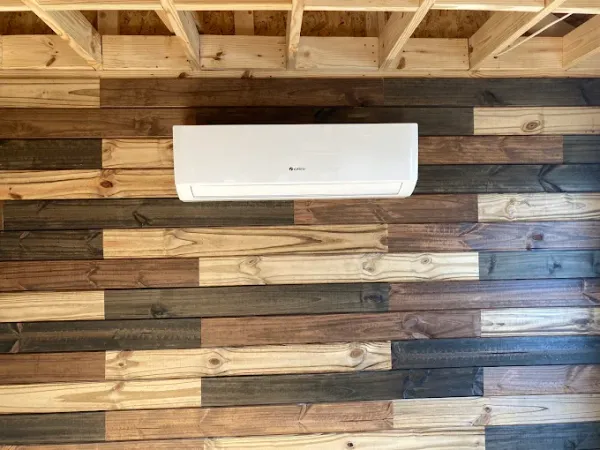
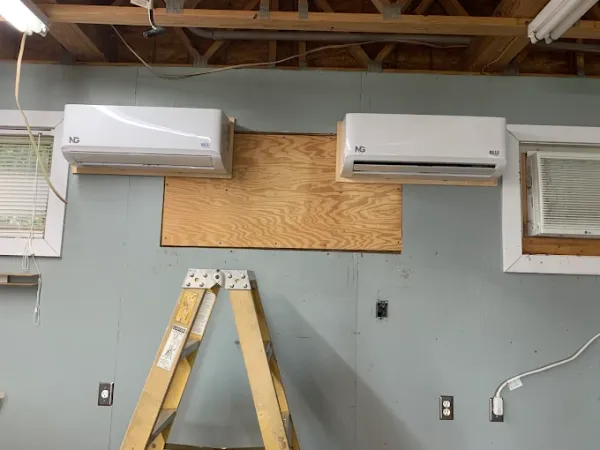
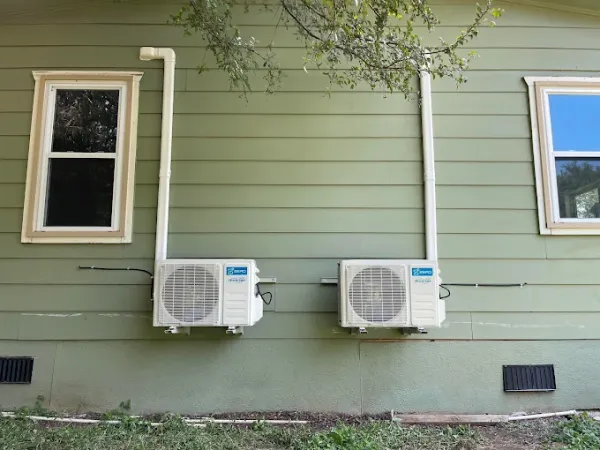
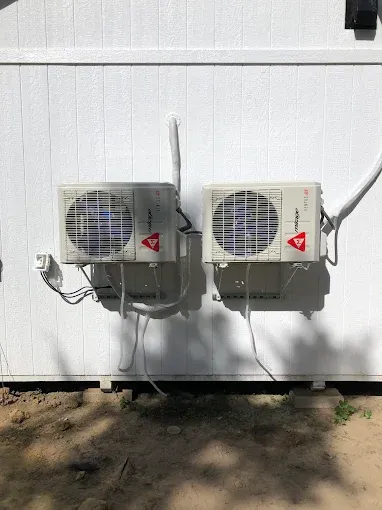
Recent Installs Near San Antonio
Actual completed jobs by the licensed installers in our Texas network.
What Greater San Antonio Homeowners Say
Real reviews from customers of the local installers we work with.
4.9 / 5 from 300 Google reviews
“Great experience would definitely do business with them again they will be my go to for mini splits!”
“Thank you for installing our split unit! Very efficient and professional service. Would highly recommend!”
“Great service! Everything was done in a few hours. Clean and professional job, Very satisfied!”
Mini Splits in San Antonio: Common Questions
How much does mini split installation cost in San Antonio?
What CPS Energy rebates apply to mini splits?
Can I install a mini split in a King William or Monte Vista historic home?
How does San Antonio heat compare to Houston for sizing?
Get Your Free San Antonio Mini Split Quote
Free, no-obligation quotes from licensed installers serving San Antonio and the surrounding Greater San Antonio area.
Get an Exact Quote for Your Home
Fill out the form below and a local pro will reach out shortly.
Mon–Fri 8am–5pm CST · Free, no-obligation quotes · No pressure, no hidden fees