
Older Homes
Mini Splits for Older Texas Homes
Bungalows, Craftsman homes, and mid-century houses across Texas were built before central air existed. Ductless adds real heating and cooling without gutting walls, dropping ceilings, or losing a closet to an air handler.
- Veteran-Owned & Operated
- TDLR-Licensed Installers (#133305)
- EPA-Certified Installers (#3102/A-720-0010)
- 4.9 / 5 Star Rated Installs
Adding ductless to an older Texas home runs $2,000 to $5,500 per zone installed, with most whole-house projects using three to five zones. It is typically 30–50 percent cheaper than retrofitting ductwork into a house that has no chase for it, and it does not require removing plaster, trim, or ceiling height.
The problem with old Texas houses
Houses built in Texas before roughly 1960 were designed to survive summer, not to be air conditioned through it. High ceilings, deep porches, transom windows, and cross-ventilation were the cooling strategy. There is no mechanical chase, no return air path, and frequently no attic space that is not already occupied by a low hip roof.
When central air arrived, these homes got retrofitted in whatever way was cheapest at the time. The results are familiar to anyone who has owned one: ducts crammed into a 140°F attic, a return grille that whistles, one room that never gets cold, and an air handler occupying what used to be a hall closet.
Ductless offers a different trade. You give up the invisibility of ducted supply registers and you accept a wall-mounted head in each zone. In exchange you get no duct losses, independent room control, and an installation that does not require opening plaster walls.
What a ductless retrofit actually costs
| Home size | Typical zones | Installed range |
|---|---|---|
| 900–1,200 sq ft bungalow | 2–3 zones | $7,000–$14,000 |
| 1,200–1,800 sq ft | 3–4 zones | $10,000–$20,000 |
| 1,800–2,500 sq ft | 4–5 zones | $14,000–$26,000 |
| Single room added to existing system | 1 zone | $2,000–$5,500 |
Compare that against a full duct retrofit in a house with no chase, which commonly runs $18,000–$35,000 once you include the drywall, plaster, and trim repair — work that is expensive and hard to do invisibly in a house with original millwork.
A significant advantage: ductless can be phased. Install the living area and primary bedroom this year, add the back bedrooms next year. A ducted retrofit is all-or-nothing.
Preservation and historic district considerations
If your home sits in a designated historic district, the exterior condenser is the element subject to review, not the interior head. Practical guidance that generally satisfies review boards:
- Place the condenser on a side or rear elevation, not visible from the primary street frontage.
- Screen it with fencing or planting rather than enclosing it — it needs airflow.
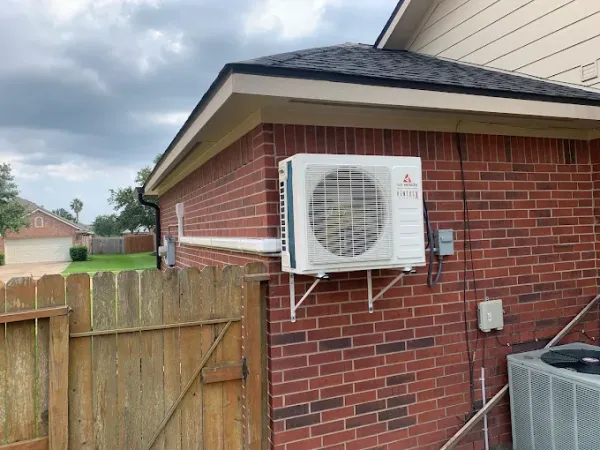
- Run the line set through an existing penetration or a discreet location; line-set covers painted to match trim are far less conspicuous than bare tubing.
- Where a wall-mount head would be visually disruptive in a formal room, consider a floor-mounted unit, which reads more like a radiator and sits below sight lines.
Check with your local commission before scheduling. Houston, Dallas, San Antonio, Austin, and Galveston all have active historic districts with their own review processes.
Sequence the work correctly
The single most common mistake on older-home projects is installing the equipment before addressing the envelope. An uninsulated attic and unsealed knee walls will force you into larger equipment that then runs constantly.
The order that produces the best result: air-seal and insulate the attic, address obvious window and door leakage, then size the system. Homeowners who do this routinely find they need one fewer zone or one size smaller unit throughout, and the equipment savings offset a meaningful share of the envelope work.
Electrical realities
Many older Texas homes still have 100-amp service, and some have original panels that no longer meet code. A multi-zone ductless system is not an enormous electrical load, but it does require dedicated circuits. Have your installer evaluate the panel early — discovering you need a service upgrade after the equipment is ordered is an unwelcome surprise, and it is common enough in pre-1960 housing stock to be worth checking up front.
See multi-zone systems for how several rooms share one condenser, whole-home replacement if you are retiring a central system entirely, or the pricing guide for full cost tables.
Recent Installs
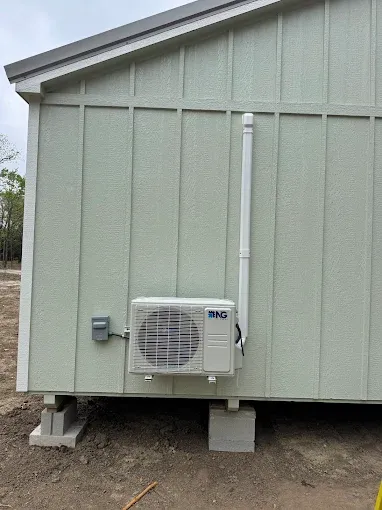
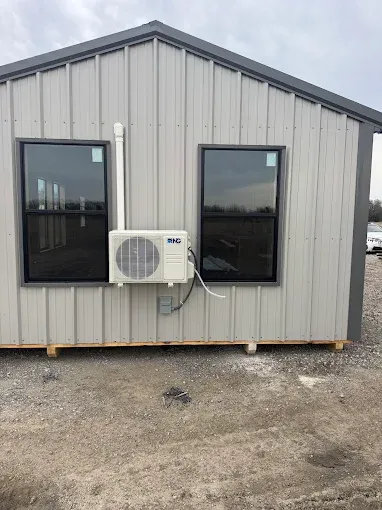
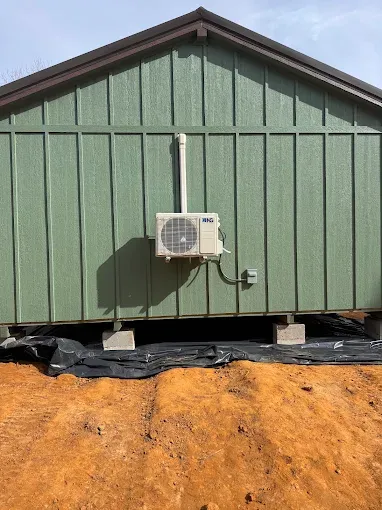
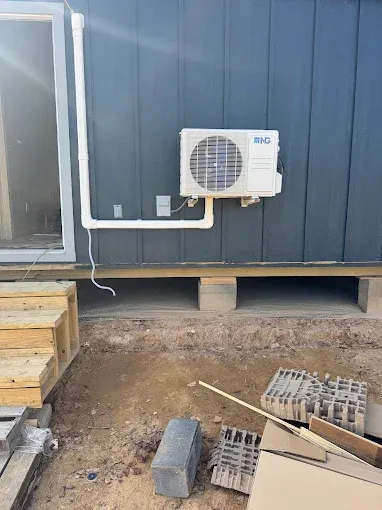
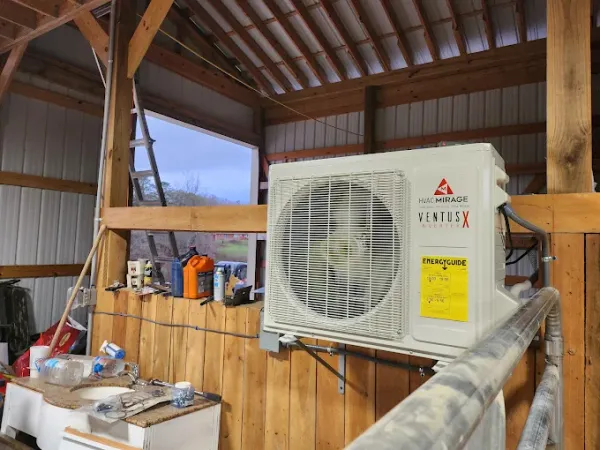
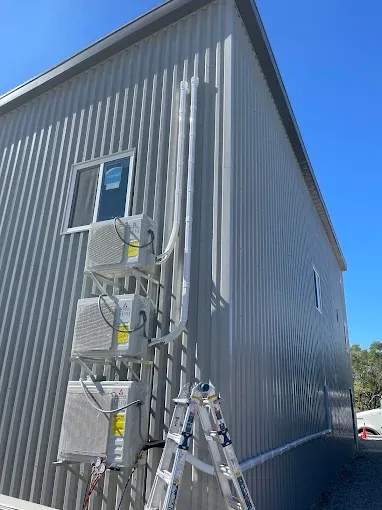
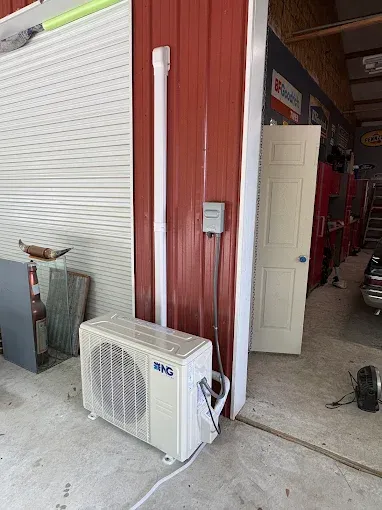
Actual completed jobs by the licensed installers in our Texas network.
Older Home Mini Splits: Common Questions
Is a mini split better than adding ductwork to an old house?
Will mini splits work in a house with no insulation?
Can I install mini splits in a historic home without harming it?
How many zones does an older home need?
Ready To Get Started?
Free, no-obligation quotes from local professionals.
Get an Exact Quote for Your Home
Fill out the form below and a local pro will reach out shortly.
Mon–Fri 8am–5pm CST · Free, no-obligation quotes · No pressure, no hidden fees