
Whole-Home Replacement
Whole-Home Ductless Systems in Texas
Replace an aging central system entirely. Room-by-room control, no duct losses in a 140°F attic, and no rebuilding the duct network to get there.
- Veteran-Owned & Operated
- TDLR-Licensed Installers (#133305)
- EPA-Certified Installers (#3102/A-720-0010)
- 4.9 / 5 Star Rated Installs
A whole-home ductless system in Texas is estimated at $10,000 to $14,500 installed for a typical 1,500–2,500 sq ft house using four to six zones. That is comparable to or slightly above a high-efficiency central replacement, but it eliminates duct losses that commonly waste 20–30 percent of conditioned air in Texas attics. Whole-home projects are always quoted individually.
When whole-home ductless is the right call
Replacing an entire central system with ductless is a larger decision than adding a zone, and it is not automatically the right answer. It is clearly the right answer in a few specific situations.
Your ducts are the problem. If a blower-door and duct-leakage test shows significant loss, or if the ducts are undersized, crushed, or disconnected in the attic, you are choosing between rebuilding the duct network and eliminating it. Rebuilding ducts in a finished Texas house is expensive and disruptive.
The house has chronic hot and cold rooms. Central systems condition to one thermostat, typically in a hallway. Rooms far from the air handler, over garages, or with west exposure will always be off. Zoning dampers help marginally. Ductless fixes it structurally.
You are already renovating. If walls are open, the marginal cost of running line sets is low.
The house never had proper ductwork. Older Texas homes with retrofitted or partial duct systems are often better served starting over without ducts than trying to fix what is there.
If none of these apply and your ductwork is genuinely in good condition, a high-efficiency central replacement is likely the better economic choice, and an honest installer will tell you so.
What it costs
Whole-home figures are estimates — every project is quoted individually based on zone count, head sizes, and condenser placement. Our firm published pricing covers single-zone systems.
| Home size | Typical zones | Estimated installed range |
|---|---|---|
| 1,000–1,500 sq ft | 3–4 zones | $10,000–$14,500 |
| 1,500–2,000 sq ft | 4–5 zones | $14,000–$24,000 |
| 2,000–2,500 sq ft | 5–6 zones | $10,000–$14,500 |
| 2,500–3,500 sq ft | 6–8 zones, often two condensers | Quoted per project |
Larger homes frequently use two condensers rather than one large unit. This costs slightly more but provides redundancy — a failure leaves half the house conditioned rather than none — and it shortens line-set runs, which improves capacity.
The duct-loss argument, quantified
This is the core of the economic case, so it is worth being specific.
Studies of Texas housing consistently find duct systems in unconditioned attics losing 20 to 30 percent of conditioned air through leakage and thermal transfer. Attic temperatures of 130–150°F in July mean that even a well-sealed duct loses substantial capacity across its length.
If you are losing 25 percent, you are paying for four units of cooling and receiving three. A ductless system delivers conditioned air directly into the room with no distribution path at all — the loss is zero by construction.
Combine that with zoning, where you stop conditioning unoccupied rooms entirely, and the operating cost difference in a typical Texas home is meaningful. It does not always fully offset the higher installed cost, but over a fifteen-year system life it frequently does.
What you give up
An honest accounting includes the tradeoffs.
Appearance. You will have a visible indoor unit in every conditioned room. Some homeowners do not mind; some strongly do. Floor-mounted and ceiling-cassette options exist and look less obtrusive than wall heads, at higher cost.
Central filtration and ventilation. A ducted system can carry a whole-house filter, dehumidifier, or fresh-air intake. Ductless units have their own washable filters, which are adequate for particulates but not equivalent to a 4-inch media filter. If someone in the house has significant allergies, discuss this before committing.
Same-mode operation. As with any multi-zone system, heads on a shared condenser must all heat or all cool. Using two condensers can mitigate this by grouping rooms with similar exposure.
Humidity control on the Gulf Coast. Properly sized units dehumidify well. Oversized units do not, because they satisfy the thermostat before running long enough to pull moisture. In Houston and along the coast, correct sizing is not optional.
Phasing the project
One real advantage over central replacement: you do not have to do it all at once. Many homeowners start with the zones that are worst — the primary bedroom and the living area — keep the central system running for the rest, and add zones over two or three years. That is impossible with a central replacement, which is inherently all-or-nothing.
See multi-zone systems for the equipment detail, the central AC comparison for a direct cost breakdown, or the pricing guide for tables by unit size.
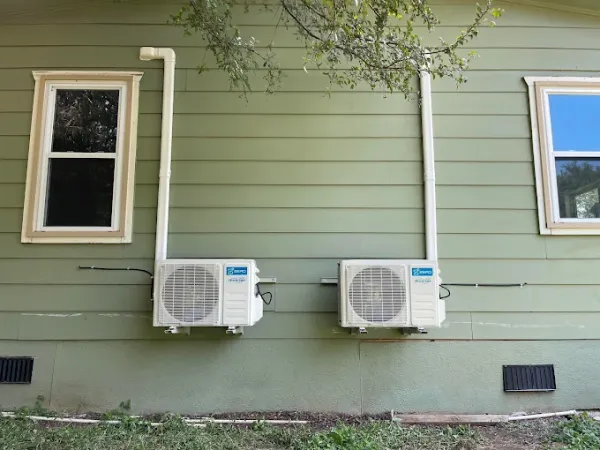
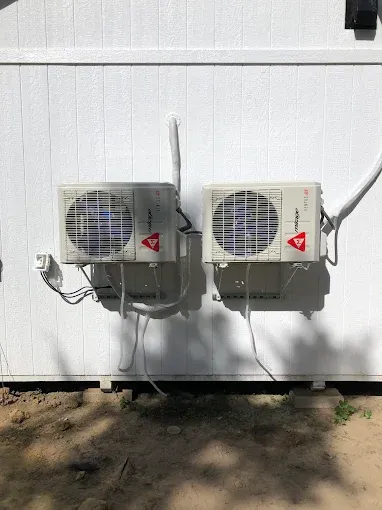
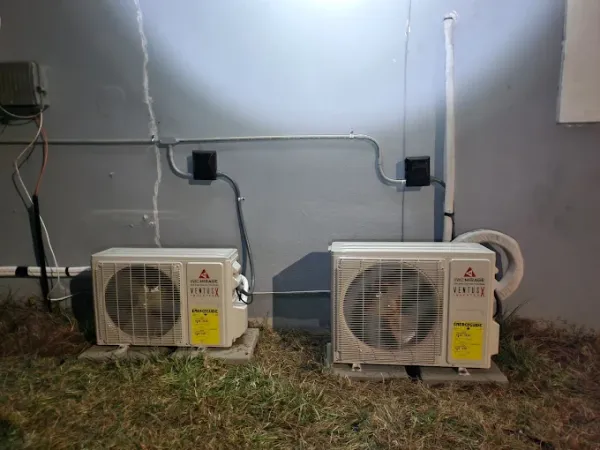
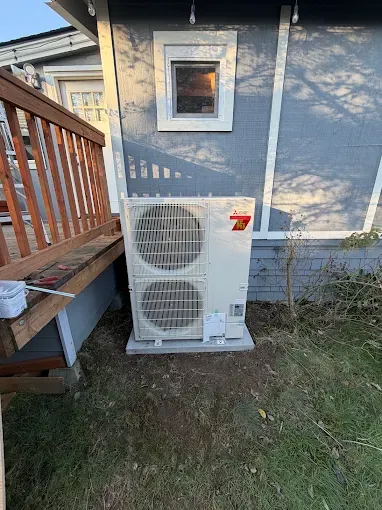
Recent Installs
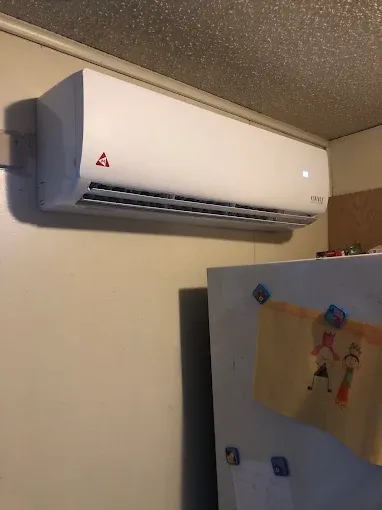
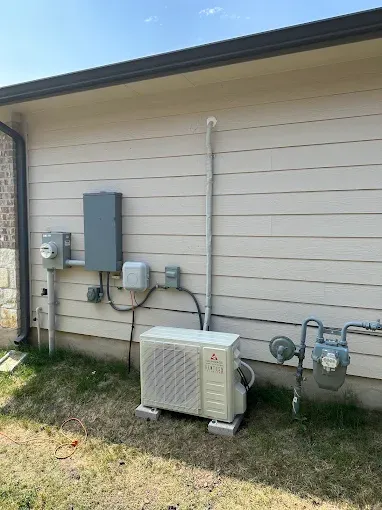
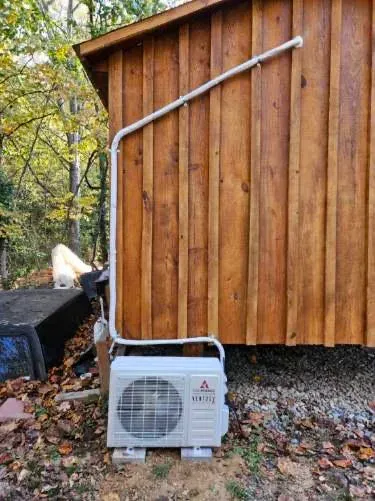
Actual completed jobs by the licensed installers in our Texas network.
Whole-Home Ductless Systems: Common Questions
How much does whole-home ductless cost in Texas?
Is ductless really better than replacing central AC?
How many zones does a whole house need?
What happens to my old ductwork?
Ready To Get Started?
Free, no-obligation quotes from local professionals.
Get an Exact Quote for Your Home
Fill out the form below and a local pro will reach out shortly.
Mon–Fri 8am–5pm CST · Free, no-obligation quotes · No pressure, no hidden fees